Before You Buy a CDP, Decide What You Actually Want It to Do

You've been in the meeting. Someone says your brand needs a customer data platform (CDP). Heads nod. A vendor or two gets invited to demo. And then, somewhere in the process, the question that should have come first gets skipped entirely: what, specifically, do you need this thing to do for you?
•
5 min read

The brands that get the most out of their CDP defined their requirements and user scenarios before they sat through a single demo. 

What a CDP Actually Does

At its core, a CDP is a database. It holds customer data. 

More specifically, it is a centralized collection point for all guest data across every channel that your brand touches – pulling in signals from your POS, your loyalty program, your ordering platform, your delivery channels, and anywhere else a guest interacts with your brand. 

Every time someone interacts with your brand – they order through your app, redeem a loyalty point, swipe a card at the POS, place a delivery order – that transaction generates a signal. The problem is those signals live in different systems that don't talk to each other, and those signals have different identifiers. 

‍

The problem isn't always that these systems don't share data, sometimes they do. The problem is that the data often can't be mapped back to an individual guest.

A transaction in the POS and a redemption in the loyalty program may belong to the same person, but if the identifiers don't match (e.g., different email addresses, no common ID, inconsistent formatting) there's no way to know that. The guest shows up as a different record in every system, and the complete picture of who they are and how they behave never comes together.

‍

A CDP's job is to pull all of those signals together and resolve them into a single profile for each guest – one record that says: this is who this person is, here is their complete history with your brand, across every channel they've used. 

This process of connecting fragmented identifiers – a phone number here, an email address there, a device ID somewhere else – into one unified profile is called identity resolution, and it's the foundational capability that makes everything else possible.

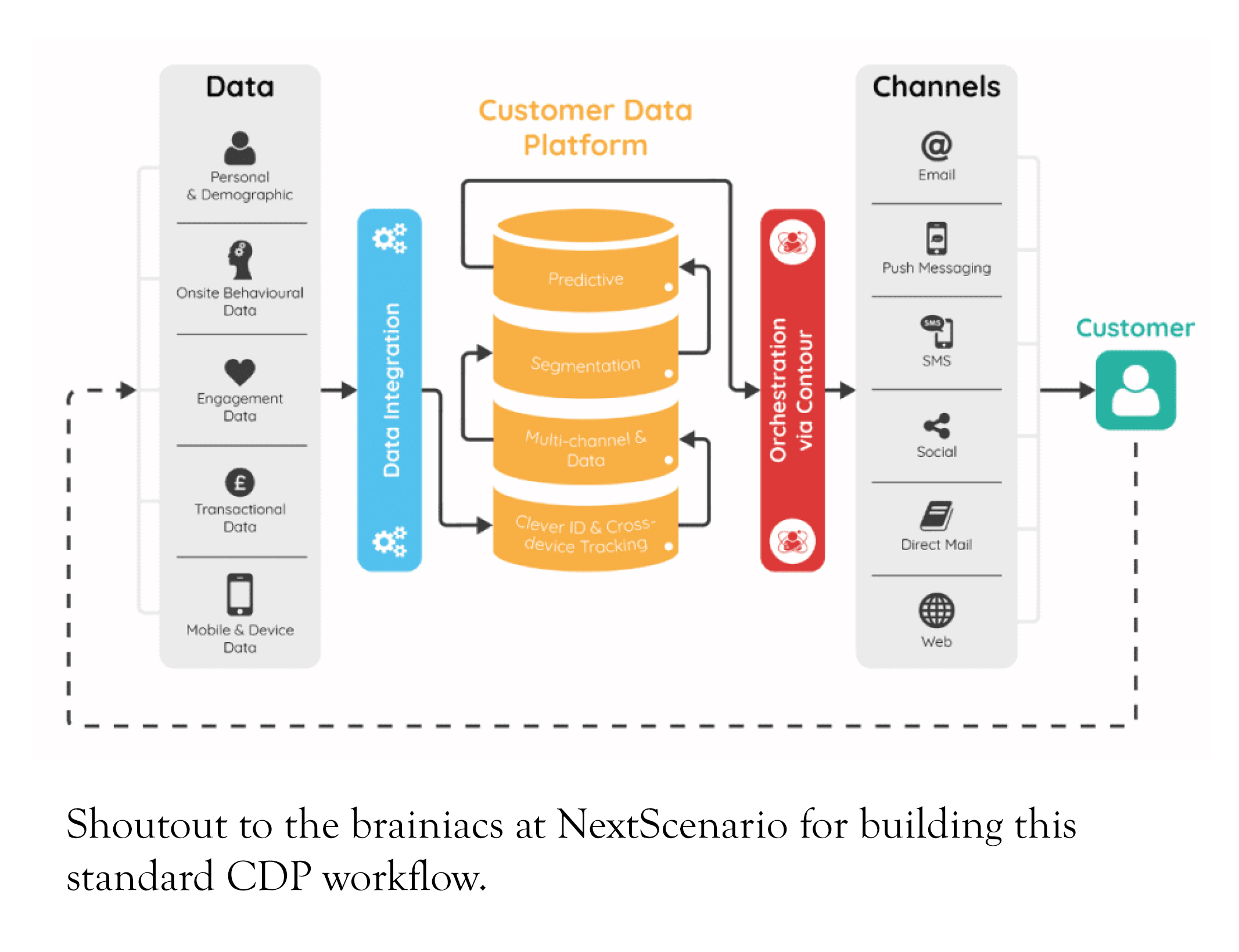
Once those profiles exist, the CDP shares them with every other tool in your stack through pre-built integrations.

‍

It should look something like this:

The CDP doesn't write the emails or run the ads – your team still does that work – but they're doing it with a complete picture of each guest instead of a partial one, and that changes what's possible and how the guest is reached.

Not All CDPs Are Being Used the Same Way

Where brands differ is in where the thinking happens.

In one use case the CDP is the analyst, in the other it's the librarian – making sure everyone has the right information, but leaving the analysis to someone else. We know these as Analytics CDPs and Data CDPs.

‍

(1) Analytics
This version looks at unified guest profiles and surfaces decisions.
  • These 2,000 guests haven't visited in 45 days and fit the profile of someone about to lapse – flag them for a win-back offer
  • These guests order lunch but never dinner – target them differently.
What flows to your email platform or loyalty engine is an audience that's already been defined. The CDP tells your other tools who to talk to and why.
(2) Data CDP

This job is simpler but just as important: be the one place every other tool goes to get its guest data. Without it, your email platform, loyalty engine, and paid media team may all be sharing data in some form – but they're likely not using the same data identifiers, which means they're not united on who the guest actually is. And when someone needs a complete, current picture, real-time data exchange isn't happening, the answer is usually a manual export from one system that was accurate as of last week.

The CDP fixes that – one continuously updated guest record, pushed to every tool in the stack, so they're all working from the same complete picture.

The question isn't whether your existing tools are capable of analysis – some are, and quite well. It's a strategic decision every brand has to make about where the responsibility for guest data analysis lives. Some brands want that intelligence centralized in the CDP, so every tool downstream is working from the same decisions.

Others distribute the analysis across specialized tools, with the CDP ensuring they all share the same guest data. Neither is wrong. But it has to be a deliberate choice, not something that gets decided by default during implementation.

Before You Evaluate Platforms, Do This First

Map your current ecosystem. List everything that touches guest data – your POS, loyalty program, ordering platform, email tool, paid media setup – and ask honest questions about each one. 

  • Where does individual guest data live today, and how clean is it? 
  • What decisions are you currently unable to make because you can't see what you need to see? 
  • Which tools in your stack would actually receive CDP outputs, and what would they do with them?

The finalists in any CDP evaluation will all show you impressive dashboards and a success story that sounds like yours. What the demo cannot tell you is whether you've correctly diagnosed what you actually need – and whether this platform, inside your specific ecosystem with your specific team, will deliver it.

‍