The Catering Series: Part 2
The Six Things That Have to Function When Implementing a Catering Platform

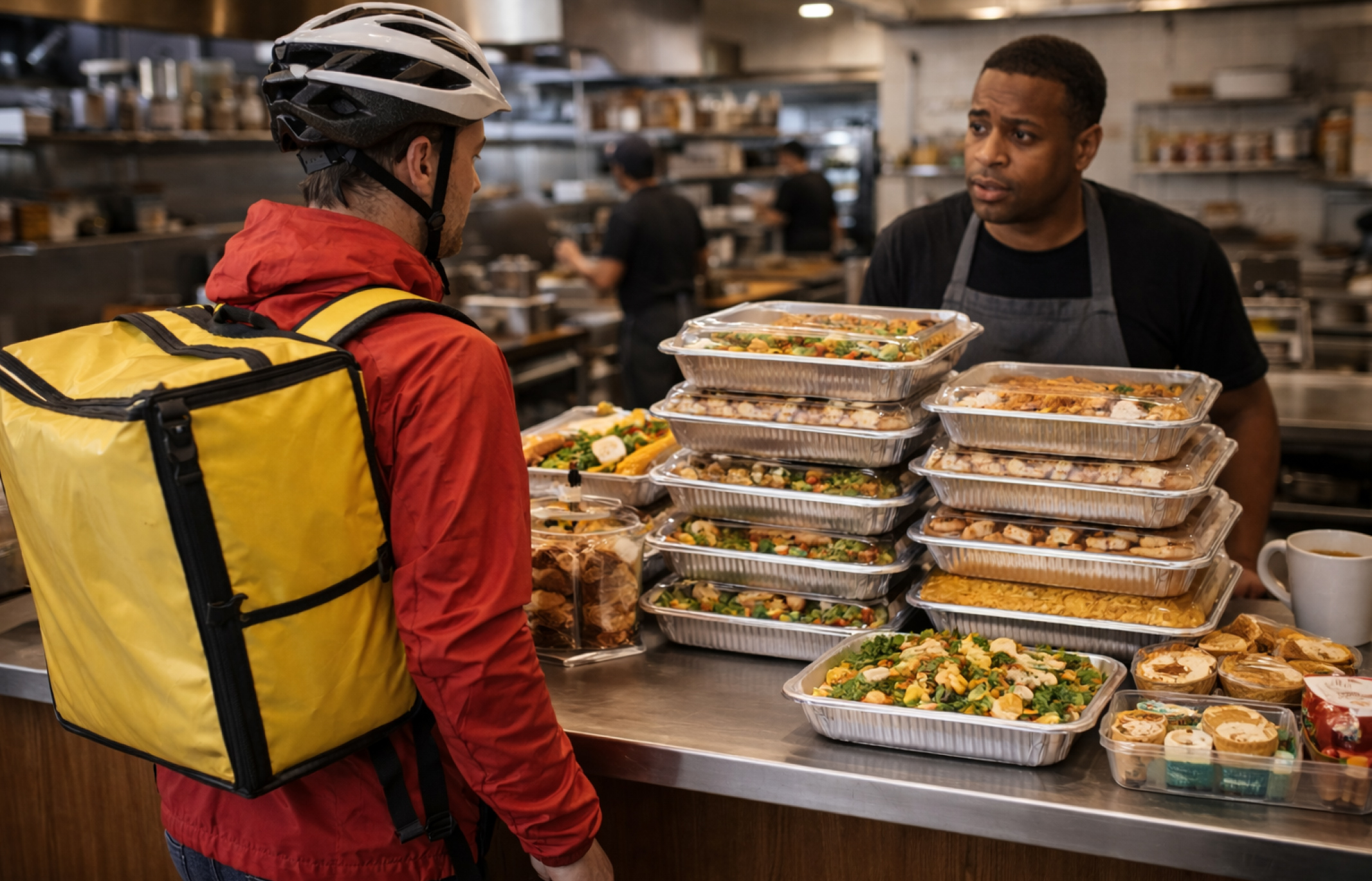
When evaluating catering platforms, most brands don’t consider all of the requirements upfront.
They select a tech vendor, start to implement, and then discover significant dissonance with the tools they already have. When this happens, payments don’t connect. Dispatch doesn’t work for large-format orders. The platform has no way to differentiate between a drop-off and a white glove delivery.
Here’s what a working on-demand catering program requires:
- A dedicated catering platform built for the job, and integrated with your point of sale (POS)
- A dispatch configuration that sends the right courier for a large-format order
- A delivery setup that matches the service level your guests expect
- A store routing configuration that gets every order to the right location
And the one thing that makes all of it work:
- Someone internally who owns the program from evaluation through steady-state operations
Simple in theory. Harder in practice. This post walks through what to look for before you commit.
Why Catering Needs Its Own Platform
Catering orders are fundamentally different from regular delivery orders. The platform has to be too.
The clearest example is prep time. A standard ordering platform is built around a single prep time setting – how long the kitchen needs to produce the order, which tells the courier when to arrive.
For a regular delivery order, 20 minutes is usually reasonable. For a catering order, that number might be three hours or even as long as three days. Set your regular, a la carte ordering system to accommodate catering and you’ve just told every guest ordering a sandwich to wait three hours. There is no universal setting that works for both.
Beyond prep time, catering requires order scheduling logic that standard platforms simply don’t have. Catering orders have to be placed in advance, and restaurants typically require anywhere from 12 to 72 hours of lead time depending on the size and complexity of the order. The platform has to enforce that window and give the brand control over setting it. On top of that, a catering order carries specific, critical information: number of guests, specific delivery instructions, setup requirements, packaging configurations.
A standard ordering platform isn’t built to capture all of that.
What you need is a dedicated catering platform. Some POS and ordering systems will describe their catering capability as a ‘module,’ but a bolt-on feature is not the same as a platform purpose-built specifically for catering.
We have worked with brands that tried to force a standard mobile ordering tool into catering.
These were the resulting challenges:
- Catering-specific items and bundles cannot be built or displayed properly within the mobile ordering system, which forces the brand to work around the platform’s limitations rather than present a clean, purpose-built catering menu.
- Guests cannot see accurate descriptions or quantities for catering items, creating confusion at the point of ordering and increasing the likelihood of errors and missed expectations.
- The ordering experience lacks the flexibility catering requires, leaving guests with no reliable way to specify per-guest preferences or dietary needs, set group-appropriate quantities, or communicate delivery/pickup timing and special instructions within the order itself.
The result is a fragmented, unintuitive experience for catering guests and cancels out any efficiency the channel was supposed to create.
The catering ordering platform is the front door. Behind it is a chain of systems – POS, payments, dispatch, delivery – and every link has to work. Most of the time when catering breaks, it breaks in one of these four places.
The Ecosystem Behind Every Order
We have all experienced this scenario at one time or another: a perfectly placed catering order – right platform, right menu, smooth checkout. Then a courier on a bike shows up to carry and deliver five trays of food.
The restaurant takes one look and calls the courier company. The courier on the bike can’t take the order. Now the restaurant has to find someone with a car. The clock is ticking and the order is now delayed. The office manager who placed the order is fielding questions from twenty colleagues wondering where lunch is. By the time the food arrives – late, with no setup, no apology that means anything – the experience is already broken. And not only will that office manager never order from you again, PLUS they want a heavy discount for the inconvenience.
This is the part of catering that catches brands off guard. The ordering platform is the front door. Behind it is a chain of systems – POS, payments, dispatch, delivery – and every link has to work.
Most of the time when catering breaks, it breaks in one of these five places.
- Payments are critical to audit before you select a platform. Every brand has at least two payment layers – one for in-store, one for digital orders. Sometimes those layers use the same payment processor, sometimes they don’t.
A new catering platform adds a third layer. If that third layer introduces another payment processor that you’re not already using, then you have the complexity of signing a new contract and integrating that vendor into your existing ecosystem. Figure out how payments flow before you commit to a platform.
- Dispatch is where the problem with a courier on bike showing up for a catering order delivery comes from. Not every ordering platform manages its own dispatch – many hand off to a third-party service. You will need to understand who is dispatching the order and if that dispatch provider can be configured to reflect your standards catering order delivery.
- Delivery service level is the next decision and one that often doesn't come up until a brand is already deep into platform implementation. Some catering orders need a standard drop-off. Others need white glove service with a courier to bring food to the location, uncover the trays, set up utensils, and leave the table service-ready.
The risk lies in this: a brand gets three quarters of the way through building their catering program and then discovers that white glove service either isn't available through their platform, or comes at a cost they didn't factor into their original budget. That's an expense you will want to consider before implementation begins.
- Store routing is an important strategic element in your catering program. Catering guests generally don't think about which of your store locations fulfills their order. This allows you to route catering orders to your locations that are better equipped to fulfill them. It is important that your on-demand catering platform has store routing capabilities to avoid doing significant manual work routing catering orders.
The Critical Element That Makes Catering Work
The brands that get catering right almost always have one thing in common – it’s ownership of the digital catering program and the implementation of an on-demand solution. They assign someone to spearhead the platform selection, implementation, and steady-state operations.
Because catering sits at the intersection of four critical areas of the business, it’s vital that the owner of the program has the authority to coordinate across IT, Operations, Finance, and Marketing.
The Payoff
In our first article in this two-part catering series, we told of an office manager and their journey placing a catering order for their organization. They’re still out there, looking for a reliable go-to. They’re ready to order, want to be done in four minutes, and will stay loyal to whoever makes it easy. The brands that build this right are the ones they find – and keep coming back to.
Read part 1 of this series here >


Ready to move? Let’s talk.