Bringing Digital Hospitality to Life
Digital hospitality is now a restaurant’s new front door. How can operators bring the warmth of the dining room to every digital touchpoint?
Let’s break it down.
What Digital Hospitality Means in 2025
Digital hospitality is how guests feel when they meet a brand online. It’s shaped not just by the tools you use, but by having a thoughtful strategy that ensures every element works together to deliver a seamless guest experience.
In practice, digital hospitality comes down to three things:
- Guests can find a brand easily. Online listings are accurate, search presence is clear, website loads quickly, and it works on a phone and tablet.
- Guests want to order. Photos are inviting and real, menus are clear, details are trustworthy, questions are answered, and the overall impression reflects the brand’s quality.
- The experience is effortless. Ordering is simple, updates are timely, and loyalty rewards are acknowledged.
In short: digital hospitality is frictionless and every step is built with care – ensuring guests feel valued, even without face-to-face contact.
Guests now expect the same ease from restaurants that they experience with every other digital brand in their lives. Because companies like Amazon, Venmo, and Spotify make the online experience feel instant and seamless, guests will wonder why ordering dinner is any harder. Restaurants that deliver digital hospitality build relationships, trust, and long-term loyal guests.
How Digital Touchpoints Shape Guest Perceptions
Every click and confirmation is a chance to deepen a relationship with guests. A smooth ordering flow feels effortless, giving the impression that the restaurant anticipated the guests’ needs. A thoughtful, timely response to a review signals care. Loyalty programs that remember a guest’s preferences make them feel valued.
On the flip side, a broken link, a missing update, or a loyalty reward that doesn’t work can undo months of brand-building in a single moment. Research backs this up – Baymard Institute, a world-class user experience (UX) research firm, found that over 70% of online shopping carts are abandoned, most often because of hidden costs or friction in the checkout process. The same thing happens with restaurant guests, if placing a mobile order feels harder than it should, many won’t take the time and effort to complete the order. And they are unlikely to come back for a second try.
In a world where hospitality is increasingly digital-first, these moments are the modern dining room.
The Business Impact of Digital Hospitality on Restaurants
Done right, digital hospitality is an excellent growth driver.
- Higher revenues from increased digital sales. According to a study conducted by Revenue Management Solutions, digital checks are on average 25 - 30% larger than in-person orders. Top-performing brands now drive up to 70% of transactions digitally, compared to an industry average of 20%.
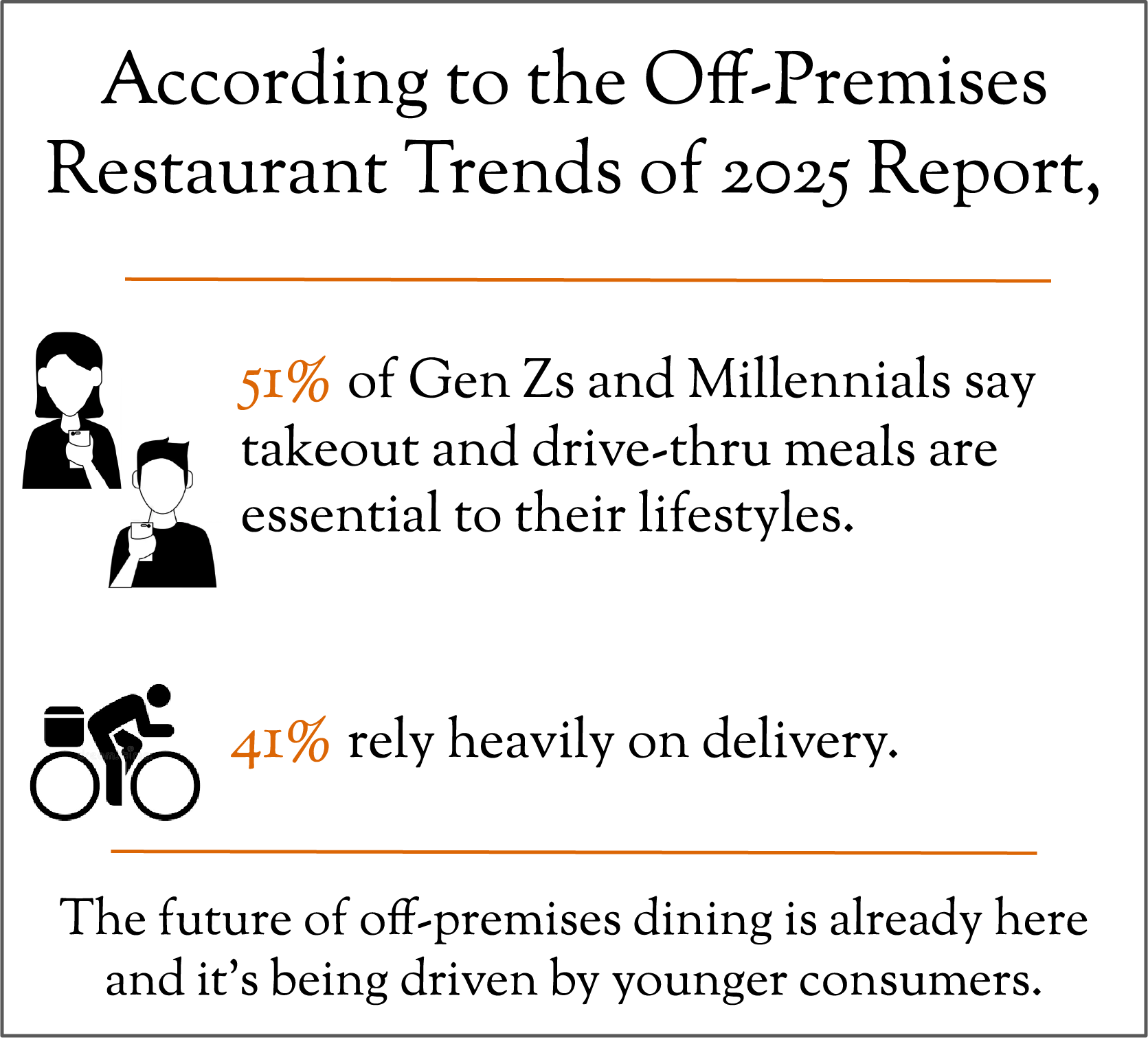
- Stronger guest loyalty and higher lifetime value. Among Gen Z adults and Millennials, 70% now order takeout more often than before the pandemic. According to Paytronix’s Loyalty Trend Report 2024, loyalty programs deepen that connection: nearly half of members (47%) engage them several times a month, and one in three (32%) use them weekly.
- Better reviews drive both traffic and brand equity. In the digital age, reviews are more than feedback, they’re a competitive lever. According to BrightLocal’s 2025 Local Consumer Review Survey, 64% of customers expect at least a 4-star rating before they consider using a business and more than half want to read detailed positive experiences before making a decision. Strong reviews are critical and a driver of traffic and brand trust.
- Greater resilience in an industry where digital dining continues to expand. Nearly 75% of all restaurant traffic now happens off-premises, according to the National Restaurant Association’s 2025 Off-Premises Restaurant Trends report. With takeout, delivery, and drive-thru now making up three out of four orders, restaurants that make digital core to their operations are best positioned to adapt and thrive.
Digital hospitality is the difference between treating online orders as transactions and treating them as relationships. The former fills seats, the latter builds brands.
Opportunities to Build Digital Strategy
Hospitality is evolving, and digital is now a core part of the guest journey. Even the best operators can strengthen how they deliver care and connection online.
- Carry your hospitality online with intention. Instead of assuming in-store excellence will automatically carry over online, design your digital guest journey with the same intentionality you bring to the dining room.
- Turn transactions into touchpoints. Rather than treating digital interactions as operational tasks, use them as moments to connect and show care.
- Make guest data work for your guests. Move beyond collecting information, integrate and analyze it to create personalized experiences that make guests feel recognized.
- Define the guest experience on your terms. Don’t let third-party platforms set the tone of your brand — own the digital journey so it reflects your hospitality, not someone else’s.
Hospitality is too important to leave to chance, especially when so much of it now happens online.
The Foundation of Digital Strategy
The future of restaurants will be shaped not by technology alone, but by how people, process, and tools come together to deliver it.
- People - Ensuring your organizational structure for your digital business model spans Marketing, IT, Operations, and Finance.
- Process - Establishing clear Standard Operating Procedures (SOP) for efficient change management across your digital ecosystem.
- Tools - Choosing technology that empowers staff and enhances the guest experience, rather than complicating it.
The brands that thrive in this era are the ones that embrace digital hospitality as part of a larger transformation — a chance to strengthen teams, refine operations, and elevate the guest experience.
When this happens, hospitality becomes a living experience that travels with every guest, everywhere.
--------------------
Our Sources, and for Further Reading:
Baymard Institute. (2025, August). 50 Cart Abandonment Rate Statistics 2025 – Cart & Checkout. Retrieved from https://baymard.com/lists/cart-abandonment-rate
Revenue Management Solutions. (2025, January). Restaurant Trends: January 2025 (Q4 Trends). Retrieved from https://www.revenuemanage.com/trends/january-2025/3 Revenue Management Solutions
National Restaurant Association. (2023, March). Restaurant expectations vary widely with different age groups. Retrieved from https://restaurant.org/education-and-resources/resource-library/restaurant-expectations-vary-widely-with-different-age-groups/?utm_source=chatgpt.com4 NRA
Paytronix. (2024, December). Annual Loyalty Report 2024: Realizing Loyalty’s Full Potential. NFS Hospitality. Retrieved from https://www.nfs-hospitality.com/wp-content/uploads/2024/10/Annual-Loyalty-Report-2024.pdf?utm_source=chatgpt.com5 NFS Hospitality
BrightLocal. (2024, March). Local Consumer Review Survey 2024: Trends, Behaviors, and Platforms Explored. Retrieved from https://www.brightlocal.com/research/local-consumer-review-survey-2024/6
National Restaurant Association. (2025, April). Off-Premises Restaurant Trends 2025. Retrieved from https://restaurant.org/research-and-media/research/research-reports/off-premises-restaurant-trends-2025/

Ready to move? Let’s talk.